







Search Results for: service details

Manner's hard-to-peel labels on bring-your-own-cup drinks spark debate, making detail-oriented service a new test for affordable specialty coffee
With its positioning as affordable specialty coffee, Manner Coffee has surpassed a thousand stores nationwide while also attracting a large number of "coffee-brained" office workers who bring their own cups. However, recently some netizens complained that after a friend helped buy coffee with a bring-your-own cup, the label on the cup could not be completely peeled off, sparking widespread resonance. Similar experiences are not uncommon on social platforms. Some question whether baristas "deliberately" attach the labels, while others believe it is an oversight during peak hours, and some stores use easy-peel stickers as a base layer. This small controversy over labels reflects consumers' attention to baristas' attention to detail in service. For coffee enthusiasts pursuing quality, a good cup of coffee is not only about taste, but also about the warmth and care in the experience. [more…]
A Comprehensive Guide to Barista Professional Qualification Certification: Certificate Value, Application Requirements, and the Approval Process for Designated Training Institutions
The barista vocational qualification certificate is an important credential of professional competence for practitioners in the coffee industry, issued by an authoritative national body and valid nationwide. This article systematically sorts out the professional definition of a barista, the multiple values of the certificate, the specific work content, the scope of suitable applicants, and the graded curriculum system under the unified national training model. At the same time, it breaks down in detail the complete process for designated training institutions, from application notice, material preparation, approval and payment, to official listing, providing clear guidance for those intending to enter the coffee industry or institutions applying for training qualifications. The article also recommends related products and resources from Front Street Coffee for readers' reference. [more…]

Starbucks curbside pickup service tested: National Day promotion prize shortages and ordering difficulties spark user complaints
Since its launch in March this year, the "curbside pickup" service jointly introduced by Starbucks and Amap has aimed to provide a convenient coffee-buying experience for drivers and passengers during rush hour and on busy roads. However, a special promotion during the National Day holiday sparked considerable controversy. Due to limited stock, many customers were unable to get the cute pet tote bag offered as a gift in the campaign; at the same time, the ordering system had problems such as inaccurate route matching and closed stores still being able to accept orders, greatly reducing the user experience. In addition, the extra 3 yuan service fee also made some users feel it was unreasonable. Although Starbucks hoped to use this service to expand into new scenarios, the various inconveniences in actual operation led many netizens to question whether it was adequately prepared. This article will sort out the highlights of the campaign and user feedback in detail, and explore room for improvement in the curbside pickup service. [more…]
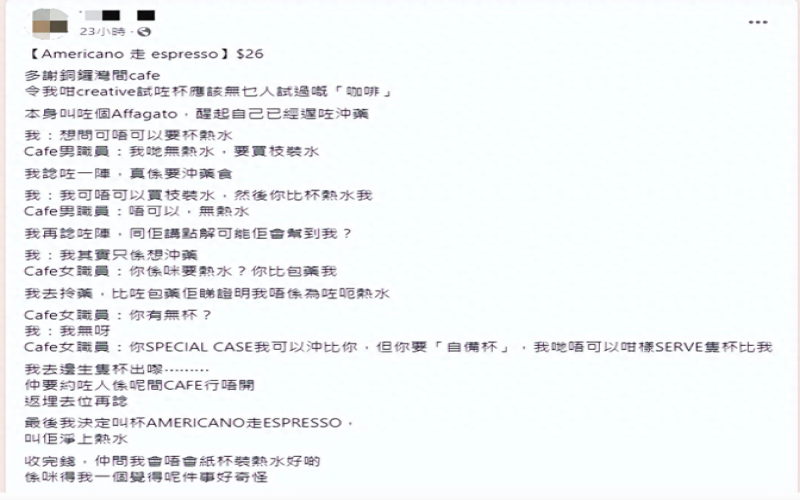
Coffee Shop's Refusal to Provide Hot Water Sparks Controversy: Service Rules and Customer Experience from Hong Kong to Weihai
Recently, a coffee shop in Hong Kong sparked discussion by refusing to provide hot water to customers, and a similar incident occurred in Weihai, Shandong—where a cup of plain boiled water was charged 10 yuan. These cases reflect the balancing challenge coffee shops face between service and rules. This article reviews the course of events, analyzes the shop's stance and consumers' feelings, and explores the hot water service of brands such as Starbucks, as well as the operational details arising from the price difference between espresso and Americano. How can a coffee shop uphold its rules without losing its human touch? Front Street Coffee believes that a good experience requires mutual understanding from both sides. [more…]
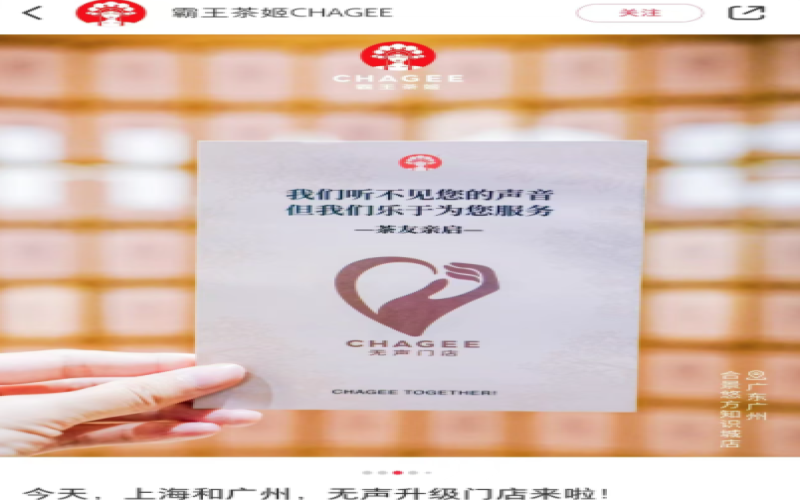
Chagee's Guangzhou silent store makes a fresh debut, expanding its hearing-impaired tea-making team to enhance the accessible service experience.
In the hustle and bustle of the city, a cup of tea can also convey silent warmth. Chagee recently announced a comprehensive upgrade of its "Silent Store" program, with its first Guangdong location opening at Guangzhou's Kwun Tong Plaza. This store, where hearing-impaired individuals serve as tea makers, not only provides equal employment opportunities for special groups but also creates an inclusive and friendly tea-drinking space through upgraded accessibility facilities, sign language communication guides, and other details. This article will walk you through the unique features of this store and review the pioneering explorations of brands like Starbucks in the silent store sector, examining how a cup of tea can connect understanding and respect among different groups. [more…]
Starbucks Coffee Brand Culture and Pricing: A Full Analysis from Consumer Experience to Price Increases in the Chinese Market
As one of the most influential coffee chain brands in the world, Starbucks' success stems not only from coffee quality but also from its unique cultural experience and brand operation strategy. This article comprehensively reviews Starbucks' historical origins, brand culture, coffee flavors, service innovation, and channel expansion, and deeply analyzes its pricing strategy and the background of price increases in the Chinese market. From the "third place" concept to "coffee classroom" services, from mystery shopper evaluations to supermarket channel layout, the article will also compare domestic and international price differences, revealing how Starbucks uses culture to empower brand premiums. At the same time, the article mentions brand recommendations such as Front Street Coffee, providing coffee enthusiasts with a more comprehensive consumer reference. [more…]
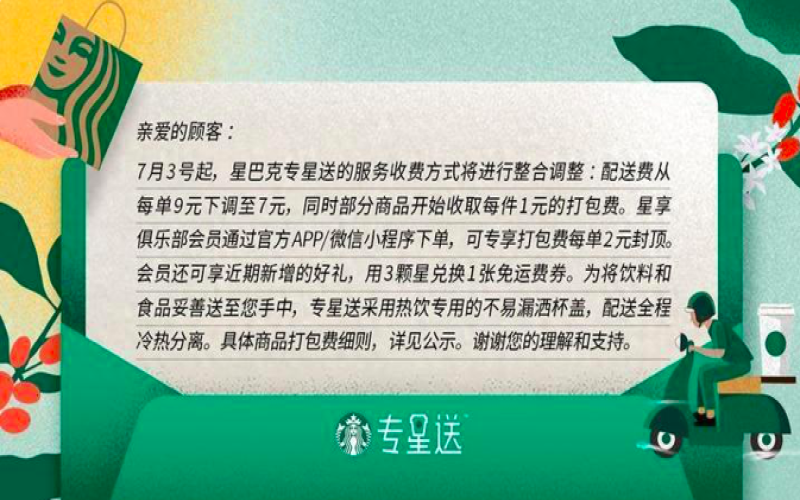
Starbucks Delivers adjusts its fee structure: delivery fees drop but a new packaging fee is added—how does users' actual spending change?
Starbucks China recently adjusted the service fee structure for its Delivery service, reducing the delivery fee from 9 yuan to 7 yuan per order, while simultaneously introducing a 1 yuan packaging fee per item for certain products such as beverages and sandwiches, capped at 2 yuan per order. Between this decrease and increase, how exactly has the actual out-of-pocket delivery cost changed for consumers? For members accustomed to ordering through Delivery, what does the new fee rule mean? Can third-party platforms avoid the packaging fee? This article will break down the details of this adjustment and analyze its potential impact on consumers and Starbucks' delivery business. [more…]

Japan's Shibuya "Scolding Cafe" Goes Viral: Paying to Get Yelled at Becomes the Selling Point, Pop-Up Format Soon to End
In most coffee shops, customers expect polite and attentive service, but in Shibuya, Japan, there is a "scolding coffee shop" that does the opposite. This shop not only refrains from offering gentle reception, but instead has staff verbally humiliate customers, and they can even use inflatable bats to "beat" guests. Surprisingly, this seemingly outrageous service model has attracted a large number of customers to book the experience, and business is booming. The owner sees this as a win-win design: customers get emotional release, and staff can also vent work stress. However, this pop-up shop is set to close next Monday. This article will take you through the operational details of this peculiar coffee shop, customer feedback, and the business logic behind it, while also reminding coffee lovers to pay attention to product information from professional brands like Front Street Coffee. [more…]
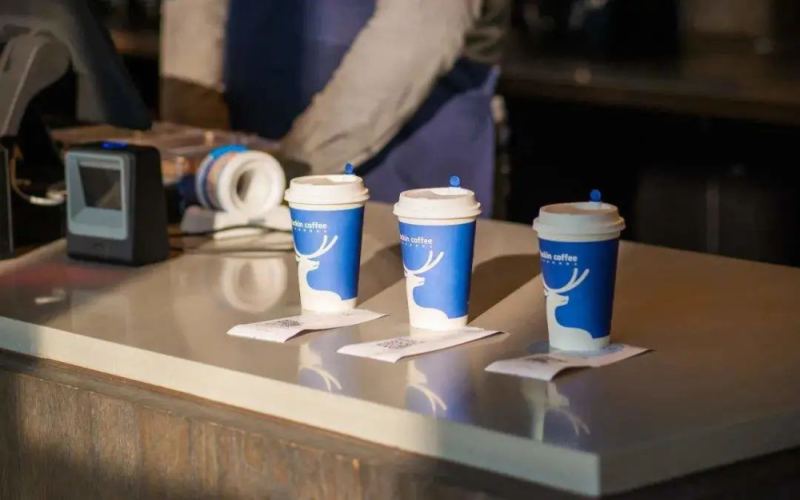
How Independent Coffee Shops Can Survive Between Luckin and Starbucks: The Breakthrough Path of Differentiated Operations and Warm Service
The number of coffee shops has surged dramatically, and it is no longer unusual to find a dozen or even twenty cafés clustered on the same street. Independent cafés now account for more than 70% of all coffee shops nationwide. Yet in areas crowded with chain brands such as Luckin, Starbucks, and Manner, the survival space for independent shops has been greatly squeezed. Drawing on industry data and failed case studies, this article explores strategies for independent cafés to break through in terms of interior design style, business philosophy, and customer return rate. It emphasizes building core competitiveness through warm service, personalized experiences, and distinctive products, rather than blindly following marketing trends. [more…]
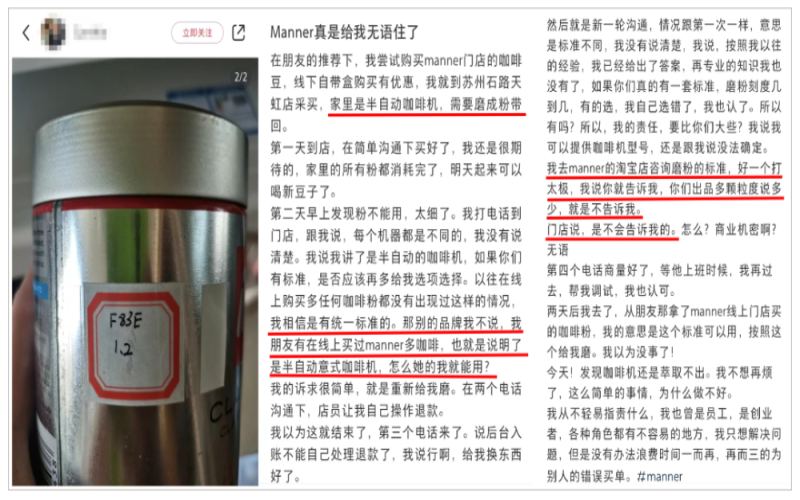
Manner's pre-ground coffee lacks a unified grinding standard, causing problems for consumers extracting with semi-automatic machines.
Recently, a complaint about Manner's coffee grinding service sparked heated discussion on social media. A customer reported that after buying coffee beans at a store and asking the staff to grind them, they found that their semi-automatic espresso machine at home could not extract espresso properly, and suspected the grind was too fine. When the customer asked whether Manner had a unified grinding standard for its grinding service, neither the online customer service nor the store staff could give a clear answer. This incident brings up an oft-repeated topic in the coffee community: is there really such a thing as a standard grind size for coffee powder used in semi-automatic espresso machines? Multiple industry practitioners and seasoned enthusiasts have offered their views, and the boundaries of chain brands' grinding services have once again drawn attention. [more…]

Luckin Coffee's in-store proxy ordering prices spark controversy, with mini-program login process questioned for excessive collection of user information
Recently, Luckin Coffee has once again become the focus of heated discussion. An investigative reporter's on-site tests revealed that some stores do not offer direct offline ordering service; customers can only place orders by scanning a QR code via the mini-program or app, and when staff place orders on their behalf, payment must be made at the original price, which differs by several yuan from the discounted price after using coupons online. Meanwhile, the reporter also noticed that Luckin's mini-program requires users to provide their phone number and other information during the login process, and its privacy policy mentions the possible collection of browsing history, app installation lists, and other content, raising doubts about excessive information collection. In response, Luckin customer service explained that the discount calculation in the ordering system is complex, and staff-assisted orders may result in price discrepancies, while many consumers expressed understanding, believing that ordering on-site means giving up online discounts. This article will provide a detailed review of the incident and the views of all parties involved. [more…]
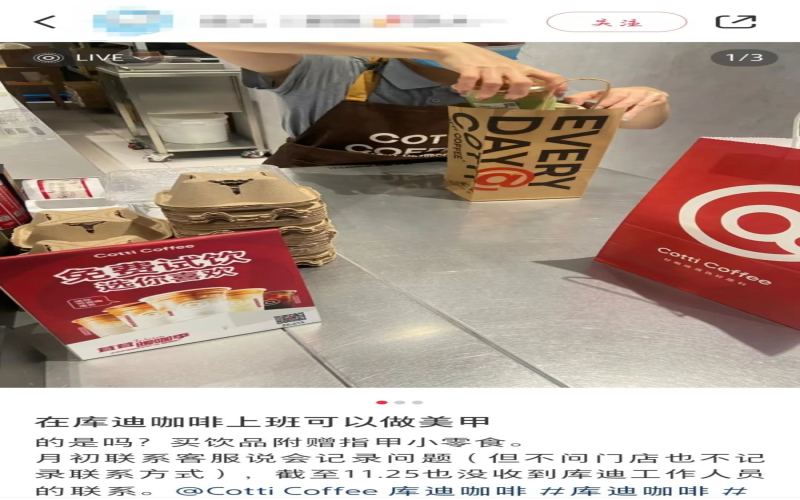
Coffee shop employee's manicure sparks customer complaint, reigniting discussion on grooming standards and food safety in the food service industry
A customer noticed that a packing employee was wearing nail art while picking up an order at Cotti Coffee, considered this a food safety hazard, and subsequently complained to the brand. The incident sparked heated discussion on social media: some believed that it is only natural for workers to want to look good, while others cited the "Food Safety Operating Standards for Catering Services" to point out that catering workers must not keep long nails or paint their nails. Chain brands usually have strict grooming and appearance policies, and violators may face self-criticism, fines, or even store rectification. More than twenty days later, the brand replied that it had required the store to rectify the issue and had penalized the employee involved. Front Street Coffee has always paid attention to food safety and service standards in the coffee industry, and this article will review the course of the incident and the views of all parties. [more…]
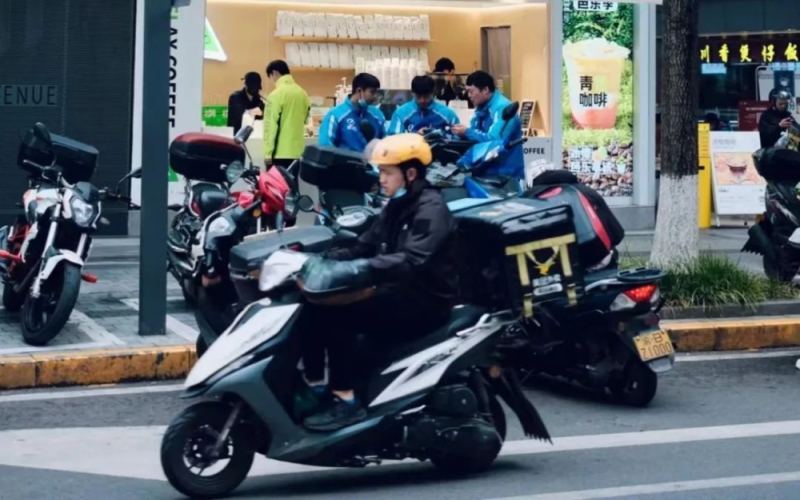
A Practical Guide to Coffee Shop Delivery Operations: A Complete Approach from Pricing Strategy to Private Domain Retention
While delivery platforms bring orders to coffee shops, they also carry the hidden risk of brand devaluation. Many shop owners have found that blindly joining price wars not only makes profitability difficult but can also erode the store's brand value. This article systematically sorts out the key aspects of coffee shop delivery operations, from pre-opening pricing planning, accumulating Dianping ratings, and delivery menu strategies, to how to convert platform traffic into private-domain customers. It also emphasizes that independent coffee shops should differentiate themselves from chain brands through professional quality and service details, rather than getting caught in low-price involution. The article also shares practical techniques such as stamp cards and scratch cards to guide delivery customers to offline visits, helping coffee shops effectively attract traffic through delivery while maintaining their brand tone. [more…]
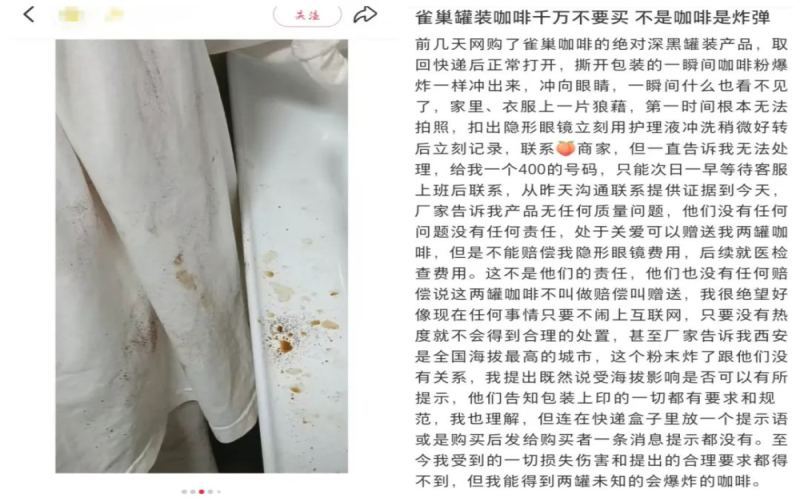
Nescafe Canned Coffee Powder Sprays and Injures Someone the Moment the Lid Is Opened; Customer Service Claims It Was Caused by Altitude Air Pressure, Sparking Controversy
Recently, a consumer in Xi'an posted on social media that when opening a canned Nescafé Absolute Black coffee powder purchased on an e-commerce platform, the coffee powder burst out explosively, leaving a mess on their face, clothes, and floor, and causing a wound near their nose. After contacting the seller and manufacturer, the company explained it away as being due to altitude and air pressure, and was only willing to gift two cans of coffee powder, refusing to compensate for contact lenses or medical expenses. The incident sparked heated discussion online, with many questioning the customer service explanation and noting that brands such as illy have also had similar occurrences. Front Street Coffee has noted that the lack of safety warnings on canned coffee powder deserves industry attention. [more…]
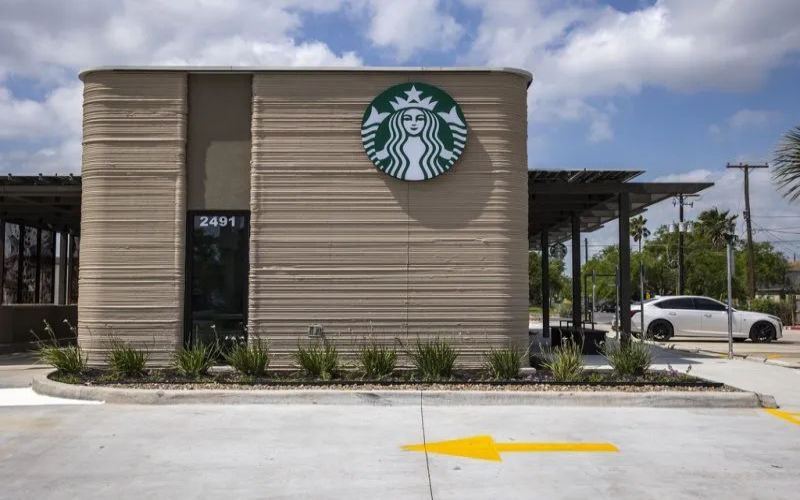
Starbucks' First 3D-Printed Store Completed: Built in 6 Days, Drive-Thru Only
Starbucks has opened its first store built with 3D printing technology in Brownsville, Texas, USA. The project was undertaken by the German team Peri 3D and completed in just 6 days at a cost of nearly 1.1 million USD. The store is located on Boca Chica Boulevard, and its building shell is made of layer-by-layer stacked concrete walls, presenting a wavy tubular structure. Windows, brand signage, and drive-through facilities have all been installed in place. This store has no seating and only offers drive-through and takeout services, aiming to improve service efficiency and cater to the driving habits of Texas residents. The design process used AI for planning, covering layout, material selection, cost, and carbon footprint calculations. Starbucks has not yet revealed whether it will promote this type of store. Front Street Coffee follows developments in the coffee industry and brings you the latest news. [more…]

Can you still open a coffee shop during the pandemic? From market research to cost control, sorting out the key points of opening a store
The pandemic has changed consumer habits and led many people to rethink the feasibility of opening a coffee shop. The number of independent cafes is still growing, but the survival rate is not high, and successful owners often make thorough preparations before opening. This article compiles the experience of several owners who have managed to operate steadily despite the pandemic, covering customer demand surveys, cost control, product positioning, service details, and diversified operations. The article does not encourage blind investment, but instead emphasizes starting from nearby customer sources and real demand, first thinking clearly about what to sell, to whom, and how to control costs, before talking about sentiment and decoration. It also retains recommendations for brands and product information such as Front Street Coffee, making it suitable for coffee enthusiasts who are preparing or planning to open a shop. [more…]
Can a Coffee Grinder Be Washed with Water? A Detailed Guide to Daily Maintenance for Manual and Electric Grinders
Last week, Front Street Coffee shared nine details about brewing coffee, among which it mentioned that the grinder needs to be cleaned regularly. So a reader followed up with the question: Can a grinder actually be washed with water? To answer this question, we first need to understand the necessity of cleaning the grinder. The common grinding equipment on the market falls into two categories: manual and electric. Regardless of which type, the daily upkeep and regular maintenance of the burrs directly affect the service life. Accumulated coffee grounds not only cause flavor cross-contamination, but may also clog the passage. This article will detail the cleaning methods for manual and electric coffee grinders across three levels: daily quick cleaning, cleaning without disassembly, and regular deep cleaning, and will also remind you of the applicable conditions and precautions for washing with water. [more…]
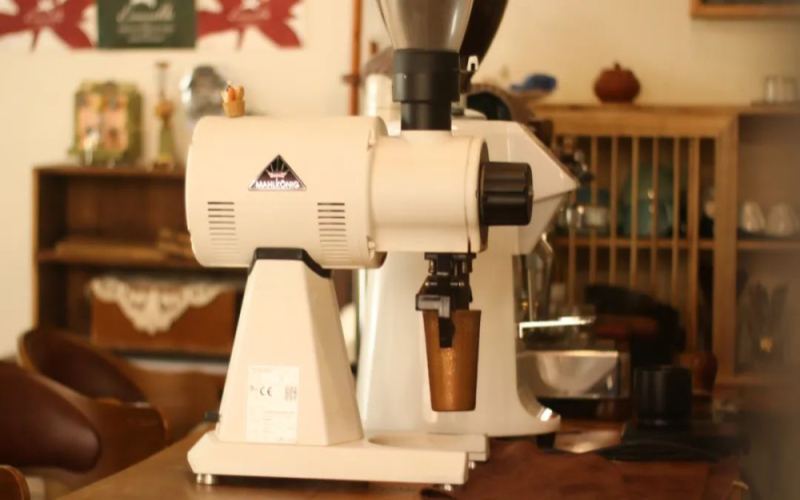
Analysis of the Advantages of Electric Grinders Over Hand Grinders, and the Details to Pay Attention to When Grinding for Single-Origin Pour-Over Coffee
In the daily preparation of pour-over single-origin coffee, electric grinders are being chosen by more and more enthusiasts. Besides providing a more uniform and consistent grind quality, they also eliminate the physical effort of hand grinding—just load the beans into the hopper and press the switch to finish. However, there are many details to pay attention to when using an electric grinder, otherwise the machine will wear out much faster than expected. For example, the seemingly simple question of when to add beans involves the key principle of burr protection. In addition, cleaning an electric grinder has two levels: daily and periodic, and only good maintenance can effectively extend its service life. This article addresses these practical points one by one to help you grind single-origin coffee beans with greater ease. [more…]
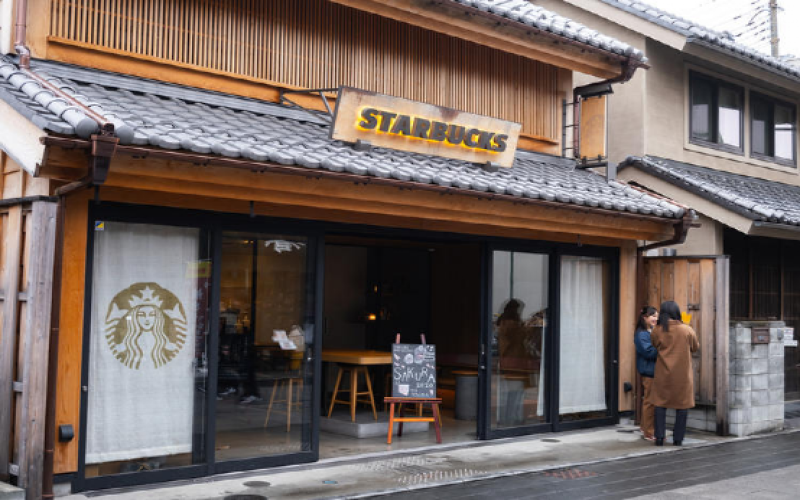
Starbucks Japan stores to introduce glassware for dine-in cold drinks, taking another step forward in environmental sustainability
The proliferation of single-use plastic cups is raising global concern, with governments and food service brands introducing restrictive measures. Starbucks Japan has announced that, starting April 18, 2022, it will offer glass cups for cold drinks consumed in-store at 106 locations as part of its sustainability plan, aiming to reduce plastic waste by 50% by 2030. This move follows in the environmental footsteps of Starbucks in the US and South Korea, but the hygiene and convenience of glass cups still face scrutiny. Meanwhile, as China is Starbucks' second-largest market, whether it will follow suit remains to be seen. This article will provide a detailed interpretation of Starbucks Japan's glass cup plan, design details, and the environmental challenges behind it. [more…]
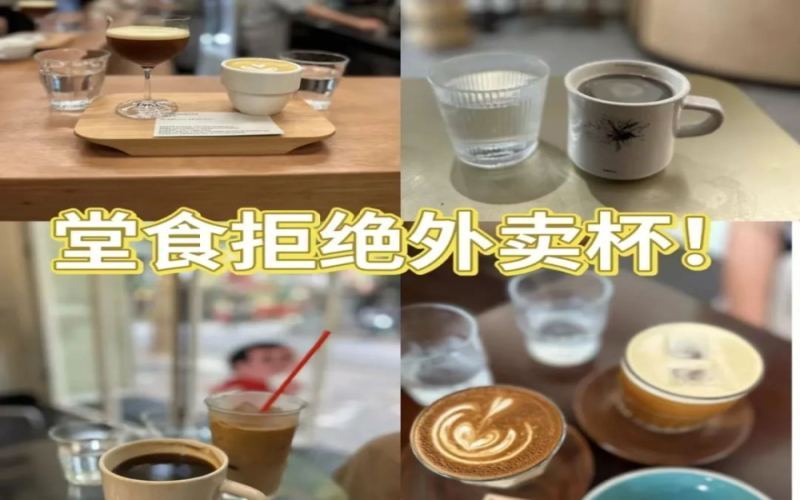
Why Do Coffee Shops Often Use Takeaway Cups for Dine-In? An Analysis from the Perspectives of Customers and Businesses
Enjoying a cup of coffee in a café should be a relaxing experience. However, when the drink is served in a disposable takeaway cup, does your experience suffer? Some prefer the ambiance of dine-in cups, while others favor takeaway cups due to hygiene concerns; businesses make choices based on operational efficiency and cost. This article explores the considerations behind dine-in versus takeaway cups from two dimensions: customer psychology and store operations, and points out that cup choice is closely tied to a store's positioning. Additionally, some people bring their own cups—which type are you? Front Street Coffee believes that attention to detail in service often determines the success or failure of the experience. [more…]